
Vocabulary is the gatekeeper. I say this in every training I deliver, and I'll say it here: if a student doesn't have the words, they can't access the content. It doesn't matter how brilliant your lesson is. If a kid doesn't know what 'photosynthesis' or 'democracy' or 'denominator' means, they're locked out of the learning.
The problem isn't that teachers don't teach vocabulary. They do. The problem is how they teach it. Writing a word on the board, saying it out loud, and asking students to copy the definition into a notebook is not vocabulary instruction - it's vocabulary exposure. And exposure alone doesn't lead to ownership. Students who learn words this way are renting the language - they might recognize it on a quiz Friday, but it's gone by Monday.
Our Academic Vocabulary professional development - what we call A.V.E., Achieving Vocabulary Excellence - shows teachers how to move students from renting words to owning them. Through experiential, hands-on training, teachers learn 8+ research-based strategies for teaching academic vocabulary across all four language domains - speaking, listening, reading, and writing.
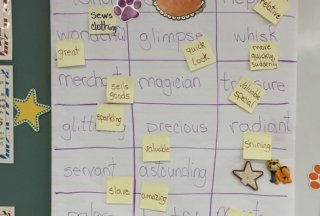
How to select the right words. Not every word deserves equal instructional time. Teachers learn to identify the 5-7 key terms per lesson that are most critical for content comprehension.
How to teach words actively, not passively. Students need to interact with new vocabulary - use it in sentences with sentence starters, discuss it with a partner, categorize it, draw it, act it out.
How to build word consciousness. Beyond individual terms, students need to become curious about language - noticing new words, thinking about word parts, and making connections between words.
How to recycle vocabulary across lessons. Research says students need 6-12 encounters with a new word before it moves into long-term memory. A.V.E. teaches teachers how to deliberately revisit and recycle vocabulary.
For the thinking behind our approach, read our informative post: Teaching Academic Vocabulary: From Renting to Owning
Q: What is academic vocabulary?
Academic vocabulary refers to the specialized language used in school subjects - words like 'analysis,' 'evaporation,' 'democracy,' and 'equation.' These are the words students need to access grade-level content.
Q: How many vocabulary words should teachers teach per lesson?
Focus on 5-7 key terms per lesson - the words most critical for understanding the content.
Q: What is the difference between teaching vocabulary and exposing students to vocabulary?
Exposure means students see or hear a word. Teaching means students actively interact with it - using it in context, discussing it, and revisiting it until they own it.
Become part of our TESOL network and gain access to valuable content!
Copyright © 2026 TESOL Trainers. All rights reserved.