
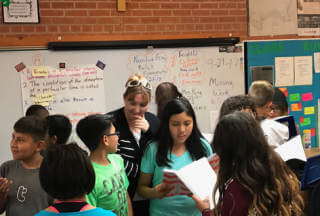
The Practice and Application component of the SIOP (Sheltered Instruction Observation Protocol) framework is where learning is consolidated. If Building Background lays the foundation, Comprehensible Input delivers the content, and Strategies provide the scaffolding, then Practice and Application is the moment when students take ownership — when they move from receiving information to actively using it.
For English Learners, this distinction is especially important. Language acquisition research is unambiguous: students do not learn language by hearing it. They learn language by using it — in meaningful, purposeful contexts where the language serves a real communicative or cognitive function. Practice and Application in the SIOP model ensures that every lesson includes exactly those kinds of opportunities.
In the SIOP framework, Practice and Application refers to the sixth component of the model, which addresses how students reinforce and extend their learning through active engagement with content and language. It is not the same as simple repetition or drilling. Practice and Application in SIOP is hands-on, integrative, and purposeful — students practice using content knowledge and academic language simultaneously, in ways that mirror real-world intellectual and communicative tasks.
The component encompasses three specific features: providing hands-on materials and manipulatives, offering activities that allow students to apply both content and language knowledge, and integrating all four language skills — reading, writing, listening, and speaking — into practice activities.
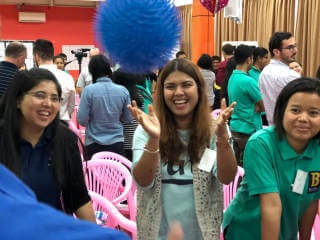
The first feature of Practice and Application asks teachers to provide physical, concrete materials that students can use to explore and reinforce content concepts. This goes beyond the abstract — it grounds learning in tangible experience.
For English Learners, the value of hands-on materials is twofold. First, they reduce the linguistic load of learning. A student who is still developing English can interact with a physical model of a cell, a set of fraction tiles, or a map with moveable labels in ways that do not require fluent English. The hands-on engagement allows the content learning to proceed even when language is a barrier. Second, concrete experience creates a memorable, multi-sensory foundation for the abstract concepts that come later.
Examples of hands-on materials and manipulatives in SIOP practice include: fraction tiles and algebra tiles in mathematics, physical models of cells, atoms, and ecosystems in science, primary source artifacts and maps in social studies, sorting cards and vocabulary tiles that students can physically arrange, science experiments with real materials, and art and drama activities that bring content to life.
The second feature moves beyond the hands-on dimension to focus on activities that require students to actively use both their content knowledge and their developing language skills. This dual focus is what makes SIOP practice activities different from generic classroom activities.
In a SIOP classroom, a practice activity is not just an opportunity to check content understanding — it is also an opportunity to practice the academic language that surrounds that content. A student who completes a graphic organizer comparing two historical events is practicing both content analysis and the language of comparison ("In contrast...", "Both... and...", "Unlike..."). A student who writes a lab report is practicing both scientific reasoning and the language of scientific writing.
Effective SIOP activities for applying content and language knowledge include: written responses using academic sentence frames, structured academic controversies where students defend positions using evidence, jigsaw activities where students teach each other and develop both content and oral language, project-based learning tasks that require integration of content and language over multiple days, and reciprocal teaching where students take turns leading comprehension discussions.
The third feature is perhaps the most comprehensive: effective SIOP practice activities integrate all four language domains — reading, writing, listening, and speaking — rather than focusing on just one or two.
This is a high bar, and intentionally so. Research on language acquisition shows that learners develop proficiency most rapidly when they engage with language across multiple modalities. A student who reads about a topic, discusses it with a partner, listens to a brief lecture, and then writes a summary has engaged all four skills — and her retention of both the content and the language is significantly deeper than a student who only read or only listened.
For English Learners, who are often channeled into passive, receptive activities (reading and listening) at the expense of productive activities (speaking and writing), Feature 22 is an important corrective. All students, including those who are still developing English proficiency, need regular opportunities to produce language — to speak their ideas out loud and to write them down — in order to develop fluency and accuracy.
Activities that integrate all four language skills include: think-pair-share (listening → speaking), followed by a written summary (writing), followed by a group share-out (listening and speaking); literature circles where students read, discuss, and write responses; science inquiry cycles where students read background information, conduct an experiment, discuss results with partners, and write a lab report; and structured academic controversies where students read sources, write talking points, debate the issue aloud, and then write a final synthesis.
The Practice and Application component addresses one of the most persistent equity issues in education: English Learners are often given less rigorous, less engaging practice than their native English-speaking peers. Because teachers worry about students' ability to handle complex tasks in English, they sometimes simplify the practice activities — assigning shorter texts, simpler writing tasks, or low-level comprehension checks.
SIOP rejects this approach. The framework insists that English Learners deserve access to rigorous, engaging practice activities — and then provides the structural principles (hands-on materials, dual content-language focus, integration of all four skills) that make that rigor accessible. The scaffold is not in reducing the task. The scaffold is in the materials, the structures, and the language support that allow students to succeed at the full-complexity task.
Research on the SIOP model consistently shows that students in classrooms with strong Practice and Application activities demonstrate greater gains in both content knowledge and language proficiency than students in classrooms where practice is primarily passive or decontextualized. The connection between active practice and learning is not surprising — but the SIOP model makes it systematic and intentional.
Consider a middle school science class studying ecosystems. After a lesson on food chains and food webs, the teacher provides each table group with a set of organism cards — pictures and descriptions of producers, primary consumers, secondary consumers, and decomposers from a specific biome. Students physically arrange the cards to create a food web (Feature 20: hands-on manipulatives). Then each student writes three sentences explaining a relationship in the food web using the frame "___ depends on ___ because..." (Feature 21: applying content and language). Finally, groups share their food webs with another group, explaining their choices orally and taking notes on similarities and differences (Feature 22: integrating all four skills).
This single activity — taking perhaps fifteen minutes — hits all three features of Practice and Application while requiring students to think analytically, use academic language, collaborate with peers, and practice reading, writing, listening, and speaking. Every English Learner in the room has access to the task, because the materials reduce the linguistic barrier without reducing the intellectual challenge.
Join the English Learner Institute — a 4-day LIVE virtual professional development experience built on the SIOP model. Led by Master Trainer Dr. John Kongsvik.
Q: What is Practice and Application in SIOP?
A: Practice and Application is the sixth component of the SIOP model. It refers to the hands-on, integrative activities that allow students to consolidate and extend their learning by actively using both content knowledge and academic language.
Q: What are the three features of SIOP Practice and Application?
A: The three features are: (1) providing hands-on materials and manipulatives, (2) offering activities for applying both content and language knowledge, and (3) activities that integrate all four language skills — reading, writing, listening, and speaking.
Q: Why is Practice and Application especially important for English Learners?
A: Language is acquired through use, not just exposure. English Learners need regular opportunities to actively produce language — to speak and write — in meaningful, content-rich contexts. Practice and Application in SIOP ensures these opportunities are built into every lesson.
Q: How does Practice and Application connect to other SIOP components?
A: Practice and Application builds directly on Comprehensible Input (students practice what they have learned) and Strategies (students use the scaffolding provided to complete practice tasks). It feeds into Lesson Delivery (teachers monitor engagement during practice) and Review and Assessment (teachers evaluate student products).
info@tesoltrainers.com | (505) 204-4361
Copyright © 2026 TESOL Trainers. All rights reserved.