
Interaction is the fifth component of the SIOP framework, and it gets to the heart of what students want most from school: opportunities to work with and learn from their peers. Of all the things a classroom has to offer, students value interaction with one another above almost everything else. Effective teachers understand this, and their classrooms reflect it. The SIOP Interaction component reminds teachers that student-to-student interaction should be a cornerstone of how teaching and learning operate—not an occasional treat, but a daily instructional practice.
For English Learners, interaction is not just desirable—it is essential. Language is learned through use. Students who spend the majority of class time listening to the teacher and working silently on worksheets are missing the practice that drives language acquisition. When students discuss ideas with a partner, negotiate meaning in a small group, or explain their thinking to a peer, they are doing the real work of language development. SIOP Interaction ensures that every lesson includes these critical opportunities.
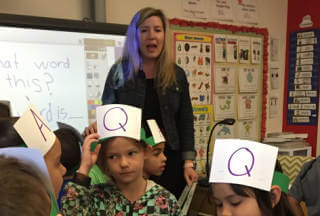
In the SIOP model, Interaction refers to the deliberate planning and facilitation of opportunities for students to interact with each other, with the teacher, and—when appropriate—with content in their native language. It is a component that encourages teachers to consciously plan for how students will work together as a means of interacting with the language and the content simultaneously.
The four features of SIOP Interaction are: providing frequent opportunities for interaction and discussion between teacher and students and among students (Feature 16), using group configurations that support language and content objectives (Feature 17), providing sufficient wait time for student responses (Feature 18), and giving ample opportunities for students to clarify concepts in their first language (Feature 19). Together, these features create a classroom environment where language is practiced, not just received.
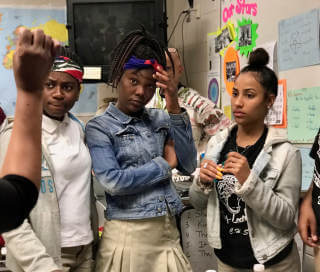
This feature lays down a clear marker: engaging in discussions with the teacher and with peers is something teachers should strive to offer students throughout every lesson. Through discussions, students think through ideas, make connections, and practice oral language expression. There are two parts to this feature. The first asks teachers to maximize opportunities for students to interact and discuss. The second challenges teachers to encourage critical thinking by exploring concepts and providing more than just one-word answers.
The research is clear: student-to-student discussions are even more powerful than teacher-to-student discussions for language development. When a teacher asks a question and calls on one student, only one student speaks. When a teacher poses a question and says “Turn to your partner and discuss,” every student in the room is practicing language simultaneously. Structured pair and group discussions multiply language practice exponentially.
Not all grouping is created equal. SIOP asks teachers to be intentional about how students are grouped—and to vary those configurations based on the objectives of the lesson. Sometimes homogeneous grouping by proficiency level allows the teacher to provide targeted support. Sometimes heterogeneous grouping gives English Learners a language model to learn from. Sometimes pairs are more effective than groups of four. Sometimes the whole class needs to come together for a shared discussion.
The key insight is that grouping is an instructional decision, not a classroom management convenience. Teachers who experiment with different configurations—think-pair-share, numbered heads together, jigsaw groups, expert panels—keep things fresh for students and create different kinds of interaction opportunities. More often than not, it is classroom management concerns that get in the way of a teacher’s willingness to use cooperative learning. SIOP encourages teachers to push past that hesitation because the language development payoff is enormous.
Wait time is one of the simplest yet most powerful strategies a teacher can use. Research consistently shows that when teachers increase their wait time from the typical one second to three to five seconds, the length and quality of student responses increase dramatically. More students participate, responses become more complex, and—critically for English Learners—students have time to formulate their thoughts in a second language before being expected to speak.
For English Learners, wait time is not a luxury. It is an equity issue. A student who is translating from their home language, searching for the right English vocabulary, and constructing a grammatically coherent sentence needs more processing time than a native English speaker. When teachers rush past a question without allowing adequate wait time, they inadvertently silence the students who need speaking practice the most.

The fourth feature of SIOP Interaction acknowledges something that many traditional classrooms ignore: students’ first languages are assets, not obstacles. When English Learners are allowed to briefly discuss a concept with a partner who shares their home language, they can clarify confusion, confirm understanding, and build a bridge between what they know and how to express it in English. This strategic use of L1 supports—rather than undermines—English language development.
This does not mean entire lessons should be conducted in students’ home languages. It means that teachers create intentional moments where L1 serves as a scaffold—a brief partner discussion to clarify a concept, a bilingual glossary for reference, or an opportunity to brainstorm ideas in the language students think in most fluently before translating those ideas into English.
Language acquisition research has consistently demonstrated that meaningful interaction is one of the primary drivers of second language development. Students acquire language not by listening passively, but by using it in purposeful communication. Every time an English Learner explains an idea to a partner, asks a clarifying question, or debates a point in a small group, they are strengthening their command of English.
Interaction also builds the academic language that English Learners need for school success. Conversational English—the language of the playground and the cafeteria—develops relatively quickly. Academic English—the language of textbooks, classroom discussions, and assessments—takes much longer and requires explicit, structured practice. SIOP Interaction provides that practice by embedding academic language use into every collaborative activity.
A 4th-grade teacher is preparing a lesson on ecosystems. After a brief introduction, she poses the question: “How do living things in an ecosystem depend on each other?” Instead of calling on one student, she uses think-pair-share. Students think individually for 30 seconds (wait time), then turn to a partner to discuss. She provides a sentence frame: “One way that [animal/plant] depends on [animal/plant] is…” After two minutes of partner discussion, she calls on three pairs to share with the whole class.
Next, she moves students into heterogeneous groups of four for a jigsaw activity. Each student reads about a different organism in the ecosystem and then teaches their group what they learned. Two students who share a home language are paired within the same group so they can briefly clarify any confusion in L1 before presenting in English. Every student speaks, every student listens, every student uses academic language—and the teacher circulates to informally assess understanding.
In twenty minutes, this teacher has activated all four features of SIOP Interaction: frequent discussion (Feature 16), intentional grouping (Feature 17), built-in wait time (Feature 18), and L1 clarification opportunities (Feature 19). Every student—including the newest English Learner in the room—has participated meaningfully.
Join the English Learner Institute — a 4-day LIVE virtual professional development experience built on the SIOP model. Led by Master Trainer Dr. John Kongsvik.
Q: What is SIOP Interaction?
A: SIOP Interaction is the fifth component of the SIOP framework. It focuses on providing structured opportunities for students to discuss, collaborate, and interact with peers and the teacher in ways that develop both language and content understanding.
Q: Why is interaction important for English Learners?
A: English Learners develop language through use, not through passive listening. Structured interaction gives students the practice they need with academic language—including speaking, listening, negotiating meaning, and expressing ideas—in a supportive classroom environment.
Q: What are the four features of SIOP Interaction?
A: The four features are: (1) frequent opportunities for interaction and discussion, (2) group configurations that support language and content objectives, (3) sufficient wait time for student responses, and (4) opportunities for students to clarify concepts in their first language (L1).
Q: How much wait time should teachers provide?
A: Research suggests increasing wait time from the typical one second to three to five seconds. For English Learners, even longer wait time may be appropriate, as students need time to process in a second language before responding.
info@tesoltrainers.com | (505) 204-4361
Copyright © 2026 TESOL Trainers. All rights reserved.